
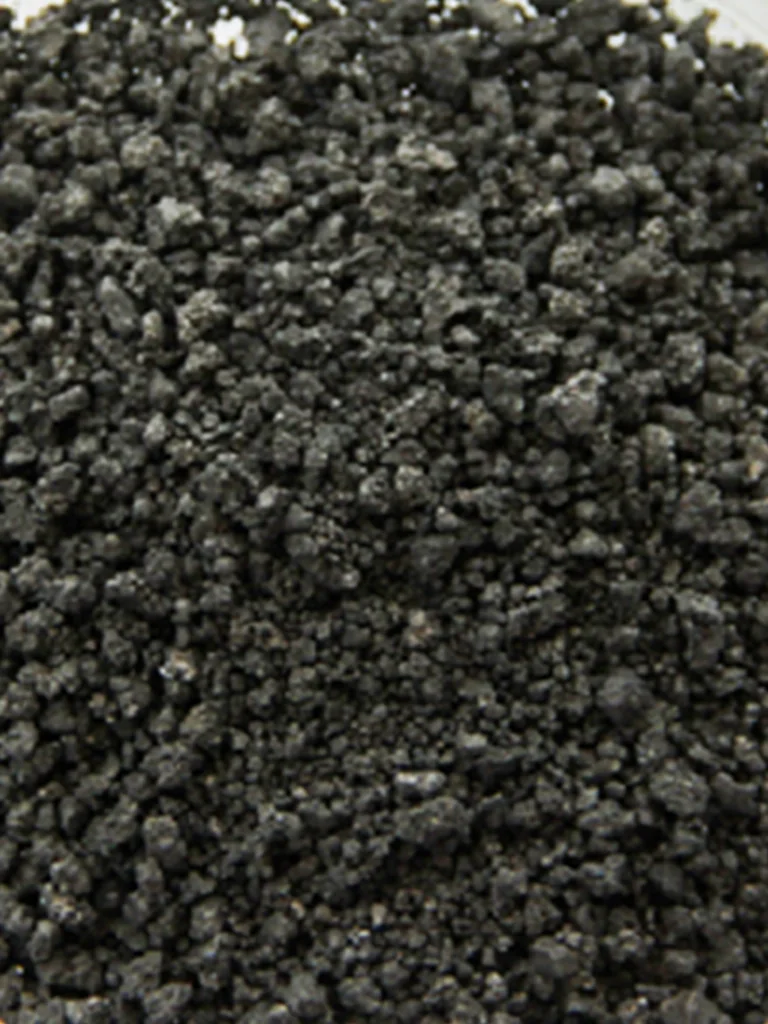
Choosing a recarburizer is less about picking the “highest purity” label and more about matching fixed carbon, impurity carry-in, particle behavior, and total cost per ton of useful carbon to a specific melting route. Graphitized petroleum coke (GPC), calcined petroleum coke (CPC), and calcined anthracite (CAC) represent three common families buyers compare. Below is a practical, non-prescriptive overview using typical specification bands; always confirm lot-specific COA before ordering.
What each family tends to offer
CAC (calcined anthracite) is widely used when plants want a mature, volume-priced carbon additive with solid fixed carbon and well-documented performance in steel and many foundry duties. Impurity posture depends strongly on feed anthracite and calcination practice.
CPC (calcined petroleum coke) usually sits between CAC and GPC on fixed carbon and volatile matter residual, with chemistry tied to green coke source and calciner operation. Applications span steel and foundry routes where CPC meets internal sulfur and ash targets.
GPC (graphitized petroleum coke) is commonly associated with high fixed carbon and low sulfur offerings when compared with many CAC/CPC grades—again, only the COA for the parcel in question counts for procurement decisions.
Typical specification snapshot (illustrative)
Exact numbers vary by grade, furnace, and supplier. Use this table as a conversation framework, not a guarantee.
| Aspect | CAC (typical bands) | CPC (typical bands) | GPC (typical bands) |
|---|---|---|---|
| Fixed carbon | Often strong; varies by raw anthracite | Often high; source-dependent | Often among the highest for recarburizers |
| Sulfur | Can be moderate; low-S grades exist | Often moderate to low depending on coke | Often positioned for low-sulfur-sensitive work |
| Ash / slag impact | Tied to mineral matter in anthracite | Petroleum coke ash profile | Often comparatively low ash in many grades |
| Relative cost positioning | Often most economical at scale | Mid-range in many markets | Often premium vs many CAC grades |
| Common discussion points | Charge normalization, ladle practice | Cathode / anode adjacent coke sourcing | Ductile iron sulfur budgets, tight chemistry windows |
Applications where teams usually start the conversation
CAC remains a standard choice for electric melting and ladle carbon adjustment when sulfur budgets are not ultra-tight and throughput matters.
CPC often appears when buyers want petroleum-coke chemistry with calcination rather than full graphitization, subject to internal limits on sulfur, vanadium, or other elements your shop tracks.
GPC is frequently evaluated where sulfur ingress must be minimized to protect nodularity or ultra-low sulfur steel products, and where higher FC can reduce additive mass—if dissolution behavior matches the furnace.
Cost: compare on carbon efficiency, not bag price
A lower $/tonne material can cost more per kilogram of carbon recovered if FC is lower or losses rise from fines or poor absorption. Normalize comparisons using expected FC, size suitability, and handling losses.
Due diligence checklist
- Request the latest COA and reconcile units (dry vs as-received).
- Confirm particle size against your feed path (batch ladle vs continuous addition).
- Align on maximum sulfur and nitrogen (if tracked) for the grade family.
- For sensitive applications, additional documentation may be available on request, and third-party inspection can be arranged.
Closing thought
There is no universal winner—only a better fit for your melt mix and your quality plan. Use typical specification language as a map; use measured results in your plant as the decision.
Related Products & Resources
- Calcined Anthracite Coal (CAC) — Cost-effective FC 90-95% recarburizer
- Graphitized Petroleum Coke (GPC) — Ultra-low sulfur FC ≥98.5%
- Calcined Petroleum Coke (CPC) — Mid-range FC ≥98%
- Particle Size Selection Guide
- Request a Comparative Quote